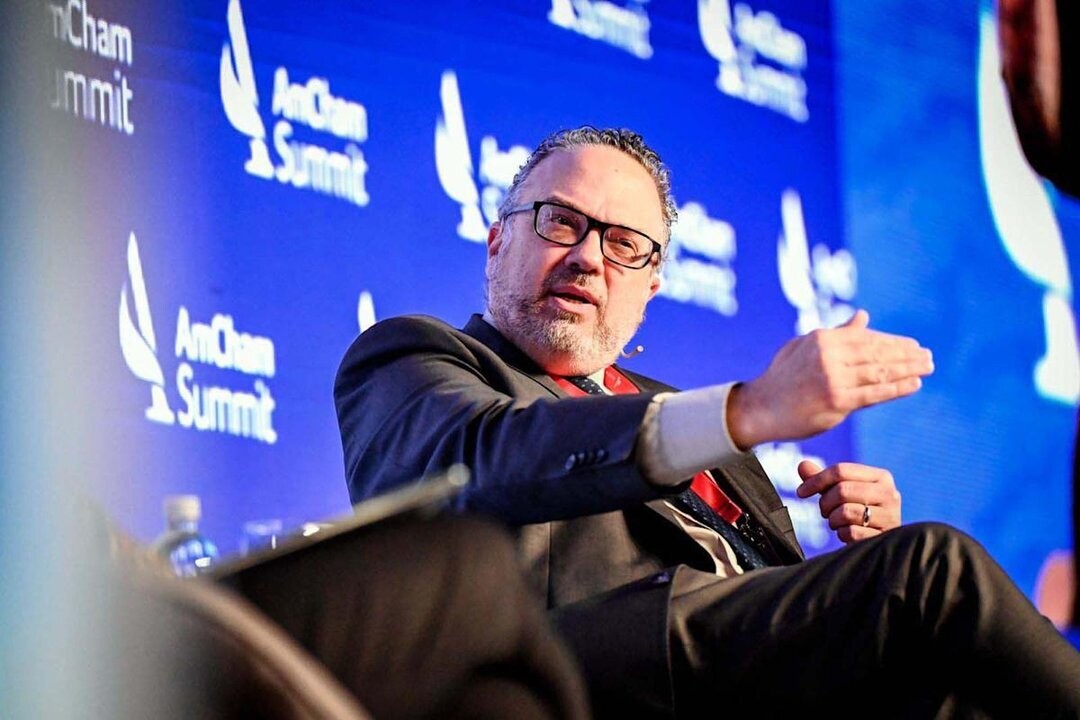
Former Minister of Productive Development Matías Kulfas stated that the Javier Milei administration represents a 'dual' economic scheme, in which the growth of coexists with a sharp drop in formal employment, and argued that the social effects of the libertarian program are already beginning to be clearly evident. 'We are living with the consequences of an economic policy that has its lights and shadows, but the shadows are becoming more and more apparent and the positive aspects less so,' Kulfas noted. Kulfas stated that the withdrawal of the State from sensitive areas has left 'a mess' in various sectors and gave the example of problems in transportation: 'Around the world, transportation is regulated because it is a sensitive public service that greatly impacts the most vulnerable sectors.' Kulfas also affirmed that the economic growth exhibited by the government is explained by sectors that generate little employment. 'What is happening is that the sectors that are driving economic activity create very few jobs or even continue to destroy them. Average consumption per person is falling,' he said and added that 'all mass consumption data is going down.' Regarding the sustainability of the economic program, Kulfas considers that the future of the model depends on the opposition. 'People are going to ask for an alternative. There is not a single year where the Gross Domestic Product grows and unemployment rises,' he maintained. For the economist, this is due to the fact that the expansion is concentrated in mining, agriculture, and energy, while labor-intensive urban activities 'are doing poorly.' Kulfas emphasized that the current situation is unprecedented. 'In 2025 the GDP grew effectively and employment fell. But that alternative cannot be returning to a monthly inflation of 8 or 10%,' he pointed out. In this sense, he raised the need for a proposal that combines macroeconomic stability with productive policies. 'Until a logical alternative appears in macroeconomics and an audacious one in production to create jobs, people are going to continue giving the government some credit,' he indicated. The economist also criticized the officialism's approach to industry and SMEs. 'This government does not believe in industrial policy. Everything the State does will be wrong and that is an impossible path,' he affirmed. 'We are seeing something dramatic: money is not enough, many people are losing their jobs,' he stated on Splendid AM 990. In this sense, he assured that since the current government took office '300,000 jobs have been lost' and listed declines in industry, construction, and commerce. Additionally, he pointed out that there is 'a very big prejudice' towards the industrial sector and questioned the lack of knowledge about productive functioning. Finally, he warned about the social impact of the current economic scheme. 'This model is showing its breakage in a very early way. In his opinion, this strategy 'levels the playing field in favor of imports' and leaves local production at a disadvantage. Kulfas also attributed the official decisions to an ideological vision. 'They are market fundamentalists. This implies that companies that could be reconverted to supply the mining or oil sector do not receive support,' he maintained. 'The people are fighting as best they can and that is already seen in daily life,' he concluded.